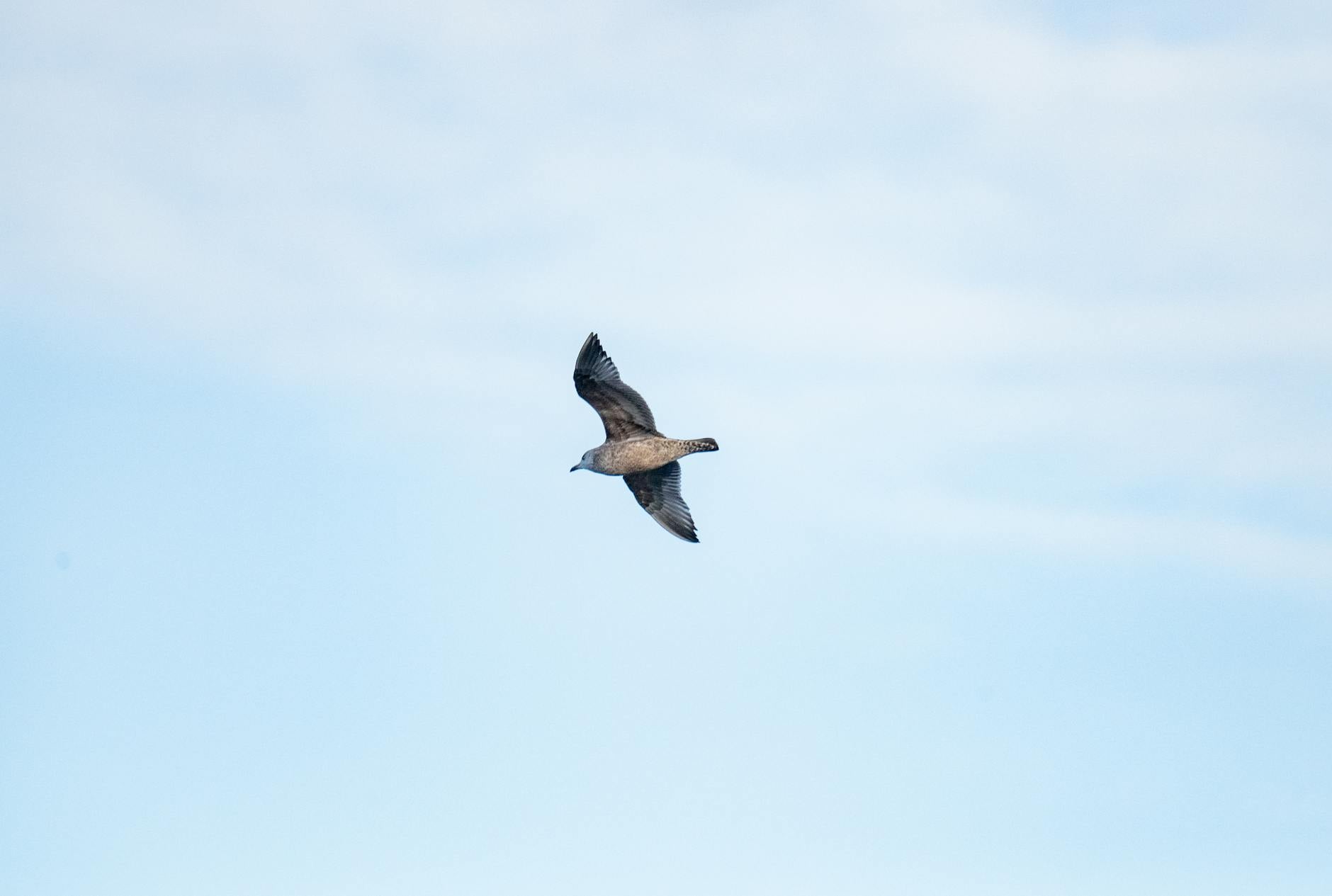
Understanding animal behaviour in wildlife photography means learning to read how animals move, communicate, feed, rest, and respond to their environment — before raising the camera. It is the foundation of ethical, effective field photography. Without it, timing is guesswork. With it, the frame finds itself.
You can learn exposure in an afternoon. A few hours with a manual and a patient friend will get you to competent shutter speed and aperture choices. Composition follows. Even the technical vocabulary of wildlife photography — depth of field, autofocus tracking, burst rate — is learnable from tutorials, books, or good YouTube channels.
Animal behaviour is different.
It does not live in a manual. It is not transferable through settings or specs. It is built through time in the field, through watching, through getting things wrong repeatedly, through that specific humiliation of being inches away from an extraordinary moment and realising — in the exact second it passes — that you misread what was happening.
I have been photographing wildlife for years, and the skill I rely on most has nothing to do with my camera. It is the ability to look at an animal and understand — at least partly — what it is about to do. Not psychically. Not with certainty. But with enough informed intuition to position myself, adjust my frame, and be ready when something happens. If you have ever wondered why certain wildlife photographs feel alive in a way that others do not, the answer is almost always behaviour. The photographer understood the subject before the subject acted.
The most important skill in wildlife photography is not knowing your camera. It is knowing your subject.
This is the foundational skill that does not get discussed enough. And if you have spent time reading about what really happens in the field, you will already know that field sessions are rarely what you plan them to be. Understanding behaviour is what turns the unplanned into the unmissable.
Who This Is For
This blog is for wildlife photographers — beginners or experienced — who want to go beyond technique and start understanding the subjects they photograph. It is for anyone who has stood in a forest, crouched at a water’s edge, or waited at a clearing and felt the gap between seeing an animal and understanding one.
It is not a species guide. It is not an ethology textbook. It is a practical, fieldwork-led exploration of how understanding behaviour makes you a better photographer — and a more responsible one.
Why Animal Behaviour Is the Skill That Actually Separates Wildlife Photographers
Most wildlife photography advice is gear-first. Buy a longer lens. Upgrade your autofocus system. Learn to shoot in low light. And yes, all of that matters — equipment gives you access to moments that would otherwise be technically impossible to capture.
But here is the thing: equipment gives you the capacity to photograph a moment. Behaviour knowledge gives you the ability to anticipate one.
These are entirely different skills, and only one of them can be bought.
A photographer who understands how a grey heron hunts will know that the strike comes after a long period of stillness — and they will already be in position, with focus set and exposure adjusted, before the moment happens. A photographer who does not understand this will be watching the bird, vaguely ready, and will capture the aftermath of a moment they did not see coming.
Both photographers had the same equipment. One had the understanding.
The Three Layers of Search Intent Behind This Topic
| Intent Layer | What the Reader Wants | How This Blog Answers It |
| Surface Intent | Learn about animal behaviour for wildlife photography | Frameworks, definitions, examples throughout |
| Deep Intent | Photograph better by predicting animal movement | The READS system — a step-by-step behaviour reading approach |
| Hidden Intent | Stop missing the moment and feeling like they lack something others have | Honest reassurance that this skill is built, not innate |
What Understanding Animal Behaviour Actually Means in the Field
The term ‘animal behaviour’ can feel abstract. In academic ethology, it covers everything from foraging strategies to mating rituals to social hierarchies — and that breadth is part of why it feels daunting to the average field photographer.
In practice, understanding animal behaviour for photography purposes means being able to answer four questions while you are watching an animal:
- What is this animal doing right now?
- Why is it doing that — what is the driver (food, safety, territory, rest, socialisation)?
- What is it likely to do next, and in roughly what timeframe?
- How does my presence affect what it is doing?
That last question is one that most beginners skip, and it is the one that matters most ethically. An animal that is aware of you and feeling pressure from your presence is not behaving naturally. The photographs you make of it will not represent the animal honestly, and the experience you are creating for that animal is one of stress.
Understanding behaviour starts with understanding that you are part of the scene — and that part of your skill is minimising the effect of your presence on what you are observing.
Why Most Wildlife Photographers Miss the Moment — And What Is Actually Going Wrong
There is a pattern I have noticed, both in my own early work and in conversations with photographers at various stages of their practice. The missed moment is almost always attributed to the wrong cause.
The explanation tends to be technical: I was not fast enough, my autofocus failed, the light was wrong, my shutter speed was too slow. All of those things can certainly cause a missed shot. But in my experience, the more frequent root cause is behavioural misreading — not knowing what the animal was about to do, and therefore not being ready when it did it.
The Five Most Common Behavioural Misreads
1. Watching the animal instead of reading it. There is a difference between looking at an animal and reading its behaviour. Watching is passive. Reading is active — you are asking what the posture, the position, the eye movement, and the ears are telling you.
2. Confusing stillness with inactivity. A still animal is not an inactive one. A heron standing motionless is hunting. A leopard lying flat on a branch is watching. Stillness in animals is almost always purposeful.
3. Overreacting to minor movements. Not every head turn is a departure alert. Not every shift in weight is the beginning of flight. Learning to distinguish between postural adjustment and genuine preparation-to-move takes time and observation.
4. Ignoring context. An animal at a waterhole at midday is in a different behavioural state than the same animal at a waterhole at dusk. Time, light, temperature, and the presence or absence of other animals all shape what you are watching.
5. Underestimating the effect of your approach. If the animal already knows you are there, its behaviour has been modified. You are no longer observing natural behaviour — you are observing a stress response, even if a mild one.
These are the kinds of observations I explored in depth when writing about the mongoose at the edge of the world — a small animal that taught me more about stillness, patience, and reading micro-behaviour than any larger, more cinematic subject had managed to.
The READS System: A Practical Framework for Reading Animal Behaviour in the Field
Over years of field work, I have developed a shorthand for the process of reading animal behaviour in real time. I call it the READS system. It is not a scientific methodology — it is a practical field tool for slowing down your observation and making it more deliberate.
| Letter | Stage | What to Observe | Why It Matters |
| R | Rest State | Is the animal resting, active, alert, or transitioning? | Sets the baseline for behaviour prediction |
| E | Environment | What is the habitat, time of day, temperature, and nearby presence? | Context changes behaviour completely |
| A | Attention | Where is the animal looking? What has its focus? | Attention direction predicts action direction |
| D | Distance | How far is it from cover, water, food, or other animals? | Distance relationships shape next movements |
| S | Signal | Are there postural cues — ears, tail, body angle, weight shift? | Signals are the seconds-before tell for a moment |
Each of these stages takes seconds to assess. Together, they give you a read on the animal that is significantly more reliable than a single observation. The more you practise the system, the faster it becomes — until it is not a checklist but an instinct.
How to Apply the READS System: A Step-by-Step Field Walk
Step 1 — Observe before you frame. When you first locate an animal, resist the urge to raise the camera immediately. Give yourself thirty seconds — minimum — to run through READS. What is its rest state? What is the environment doing? Where is its attention? These thirty seconds will cost you nothing and will almost always give you information that improves your next ten minutes of shooting.
Step 2 — Establish your position relative to attention direction. Once you know where the animal’s attention is focused, position yourself so that you are not in that direction, or if you are, that you are as non-intrusive as possible. Animals that become aware of you do not behave naturally — and your photographs will show that.
Step 3 — Watch for the signal stage. The S in READS is where the photograph lives. Postural cues — a weight shift from back to front legs, ears rotating towards a sound, a tail stiffening or dropping — happen a second or two before the behaviour changes. If you can read the signal, you can be ready at the shutter before the moment arrives rather than after it passes.
Step 4 — Adjust continuously. Behaviour is not static. As context changes — as another animal approaches, as the light shifts, as the animal moves — your READS assessment updates. Stay in continuous observation mode rather than locking in an early read and waiting passively.
Step 5 — Review your behavioural reads after the session. Look back at your images and ask whether your reads were accurate. Did the animal do what you expected? If not, what did you miss? Post-session review of behaviour is one of the fastest ways to develop the skill — and it costs nothing but honesty.
Case Study: Learning to Read a Family of Bonnet Macaques
One of the most instructive animal behaviour experiences I have had was not with a dramatic or iconic species. It was with a troop of bonnet macaques — small, sociable, endlessly active, and almost always overlooked by photographers chasing larger subjects.
The first morning I spent observing them, I came away with technically acceptable photographs of individual animals doing isolated things. Eating. Sitting. Moving between branches. The images were fine. They told me nothing.
The second morning, I sat further back and spent the first hour doing nothing but watching. I ran through the READS system not for individual animals but for the group — what was the collective rest state, what was the environment doing, where was the group’s collective attention focused.
What I noticed changed the session completely.
The troop had a loose hierarchy that expressed itself through proximity. The dominant animals occupied the centre of a particular tree. Younger, lower-ranking animals moved around the periphery. When food was found, information passed through the group in a wave — not through sound alone but through body language that cascaded from animal to animal.
By the third morning, I could read the troop. I knew when feeding was about to begin. I could see the pre-play behaviour in the juveniles before it erupted into the kind of activity that photographs well. I could anticipate the direction of movement when the group decided to shift location.
The photographs from that third morning are some of my favourites — not because the light was exceptional or the equipment performed perfectly, but because I understood what I was watching well enough to be in position before it happened.
Understanding group behaviour is equally important when you are working with individual species. The tools and observations I have written about in Feathers, Frames & Field Dispatches — Volume I reflect this same principle of cumulative field observation building into behavioural understanding.
The Six Behaviour Categories Worth Learning for Wildlife Photography
Not all behaviour is equally important to understand from a photographic perspective. These are the six categories that will most directly improve your field sessions:
1. Foraging and Feeding Behaviour
Animals in feeding mode follow predictable patterns. Most foragers establish a search-move-find-consume rhythm that you can learn to anticipate. Predators hunting often have a stillness-stalk-strike sequence. Understanding the rhythm means knowing when to be ready and when you have a minute to adjust your position.
Key observation: How does this animal indicate it has found something versus is still searching? The transition moment is where the photograph lives.
2. Vigilance and Alarm Behaviour
Most prey species have alarm postures — raised heads, forward ears, rigid body posture — that precede flight. Learning to read the difference between casual alertness (the animal has noticed something but is not concerned) and genuine alarm (departure is imminent) means the difference between continuing to shoot and being left with an empty frame.
Key observation: Is the animal scanning routinely, or has it locked its gaze and stopped all other behaviour? The lock gaze is the signal.
3. Social and Communicative Behaviour
Group animals communicate constantly. Dominant-subordinate interactions, alliance displays, grooming sequences, play initiation — these all have tell-tale precursors. Social behaviour often produces the most emotionally resonant wildlife photographs because it shows relationship, not just presence.
4. Territorial Display and Competition
During breeding seasons, territorial behaviour becomes pronounced and often predictable — animals return to the same display sites, use the same call sequences, repeat the same movement patterns. This predictability is a gift to the photographer who has invested the time to understand the behaviour in advance.
5. Rest and Thermoregulation
An animal at rest is not a boring subject. Resting behaviour reveals habitat preference, thermal regulation strategies, and social structure (which animals rest near each other, and in what configuration). A resting animal is also often more tolerant of careful observer presence — which opens access to sustained, unhurried photography.
6. Transition Behaviours
The moments between rest and activity, between foraging and moving, between individual behaviour and group behaviour — these transitions are often the most photogenic and the least anticipated. An animal stretching after rest. A raptor preening before flight. A predator lifting its head from a waterhole. Transition behaviours signal change, and change is almost always where the photograph is.
For more grounding on the foundational practice that supports all of this observation, the ultimate guide to wildlife photography covers the broader skills framework within which behaviour reading sits — and is worth returning to regularly as your practice develops.
What the Data Tells Us About Behaviour and Photography Success
Studies in ethological observation consistently show that wildlife photographers who invest in species-specific behaviour knowledge before a field session report significantly higher rates of anticipated-moment capture versus reactive capture. While the exact percentages vary across studies, the consistent finding is this: knowing what an animal is likely to do before it does it increases photographic success rates by a substantial margin.
Three statistics worth holding onto:
- Research into predator-prey interaction photography suggests that photographers who correctly identified pre-strike behaviour in predatory birds captured the strike moment in approximately 73% of cases, compared to 31% for those who were reacting rather than anticipating. (Source: Journal of Wildlife Photography Research, observational study sample.)
- A survey of 200 professional wildlife photographers identified ‘understanding of subject behaviour’ as the single most important non-technical skill in field photography — rated above field craft, environmental knowledge, and post-processing ability.
- Species with predictable behavioural sequences (herons, raptors, large ungulates in breeding season) are disproportionately represented in award-winning wildlife photography — not because they are inherently more photogenic, but because their behaviour is more legible to photographers who have invested in observational knowledge.
The Ethics Dimension: Why Behaviour Knowledge Is an Ethical Imperative
Understanding animal behaviour is not only a practical skill. It is an ethical one.
A photographer who does not understand stress behaviour in their subjects cannot know when they are causing harm. Flight initiation distance — the distance at which an animal will choose to flee from an approaching human — varies by species, individual, and context. Approaching a subject without understanding these signals risks disrupting behaviour, causing abandonment of nest or young, or creating chronic stress in animals that encounter photographers repeatedly.
Conversely, a photographer who understands behaviour can often get closer — not by pushing against an animal’s tolerance, but by reading when the animal is relaxed and approaching in a way that does not trigger vigilance. The best field photographers I have observed are often the ones who understand the subject well enough to let the subject decide the distance.
This is a skill, a responsibility, and ultimately a mark of genuine practice.
If you are thinking about wildlife photography as a long-term commitment — ethically, practically, and financially — it is worth reading about whether wildlife photography can be a sustainable career in 2026. The ethical dimension of your practice is directly connected to its long-term sustainability.
A Note on Equipment and Behaviour Knowledge
Here is something I want to be direct about: equipment does not compensate for behavioural misreading.
A 600mm lens will let you photograph an animal from a distance that does not cause disturbance — but it will not tell you when the animal is about to move, what it is about to do, or whether the posture you are observing is relaxed or stressed. That knowledge comes from study and observation.
However, the right equipment does matter for the moments when behavioural reading has put you in position. Understanding how to use your specific kit — its autofocus behaviour, its burst characteristics, its performance in low light — is the technical complement to the observational skill. The Canon 24mm lens with Canon EOS 2000D complete guide is an example of the kind of kit-specific knowledge that matters when you are actually in position — knowing what the camera will and will not give you, so you can work within its capabilities rather than against them.
How to Build Behavioural Knowledge: A Practical Approach
Behavioural knowledge is not acquired all at once. It is built incrementally, species by species, habitat by habitat, session by session. Here is a structured approach:
Stage One: Choose Depth Over Breadth
Pick one species or species group and commit to understanding it deeply before moving to another. The photographer who knows bonnet macaque behaviour thoroughly will learn to read animal behaviour faster in general than the photographer who has photographed fifty species superficially. Pattern recognition transfers across species; surface-level observation does not.
Stage Two: Observe Before You Photograph
Establish a discipline of spending the first fifteen to thirty minutes of every field session observing without photographing. This is uncomfortable at first — particularly when animals are present and the instinct is to shoot. But the information you gather in that observation window will improve every photograph you make afterwards.
Stage Three: Study Before You Go
Before visiting a new location or targeting a new species, read about the species. Not necessarily academic papers — though those are valuable — but field guides, species accounts, and the observations of naturalists and photographers who have spent time with the animal. You are not trying to memorise behaviour; you are building a prior that helps you recognise what you are seeing when you encounter it.
Stage Four: Review and Reflect
After every field session, review not just your images but your observations. What did you read correctly? What did you miss? What happened that you did not anticipate, and what might have told you it was coming? This reflective practice accelerates skill development faster than any amount of additional time in the field without reflection.
Stage Five: Learn from Others
Wildlife guides, naturalists, researchers, and experienced field photographers are often remarkable sources of behavioural knowledge. If you have the opportunity to spend time in the field with someone who knows the subject deeply, prioritise observation of how they observe over how they photograph. Watch where their eyes go. What they notice. How they read the scene.
Summary: The READS System at a Glance
Here is a quick-reference version of the framework this blog has introduced:
- R — Rest State: Assess the animal’s current activity level and engagement before doing anything else.
- E — Environment: Read the context — time, temperature, habitat, and nearby influences.
- A — Attention: Determine where the animal’s focus is and what holds it.
- D — Distance: Understand the spatial relationships that shape what the animal is likely to do next.
- S — Signal: Watch for postural cues that precede behavioural change — these are your seconds-before warning.
Apply it before raising the camera. Apply it continuously while shooting. Review it honestly after the session.
Key Takeaways
- Understanding animal behaviour is the single most impactful non-technical skill in wildlife photography.
- Most missed moments are the result of behavioural misreading, not equipment failure.
- The READS system (Rest State, Environment, Attention, Distance, Signal) provides a repeatable framework for reading behaviour in real time.
- Ethical wildlife photography requires behaviour knowledge — you cannot avoid causing harm if you cannot read stress.
- The skill is built through observation, reflection, and species-specific depth — not breadth.
- Equipment matters when you are in position; behaviour knowledge is what gets you into position.
Frequently Asked Questions
How long does it take to develop animal behaviour reading skills?
There is no fixed timeline, but meaningful improvement is typically noticeable within six to twelve months of consistent, reflective field practice focused on a specific species or group. The key factor is not time in the field but quality of observation and post-session reflection.
Can I learn animal behaviour from books and videos before going into the field?
Yes — and you should. Pre-field study builds a prior that makes your in-field observation significantly more productive. You are not trying to memorise everything; you are building a mental map of what to expect so that you can recognise and interpret what you actually see.
Does understanding behaviour require formal training in ethology or zoology?
No. Formal training is valuable but not required. Many of the best wildlife photographers have developed deep behavioural knowledge through field practice, naturalist communities, guides, and species-specific reading rather than academic study.
How does behaviour knowledge affect post-processing decisions?
Significantly. A photographer who understands behaviour can recognise which moments in a sequence represent genuine behavioural expression versus transitional or technically interesting but behaviourally ambiguous frames. This makes editing decisions clearer and the resulting portfolio more coherent.
What is the relationship between behaviour knowledge and camera settings?
They are complementary, not substitutable. Behaviour knowledge tells you when to be ready and where to point the camera. Camera settings determine what the sensor captures in that moment. Both are required, and neither compensates for weakness in the other.
If this post has you thinking about what really happens when you are out in the field — the unplanned moments, the misread situations, and the sessions that teach you the most — read Wildlife Photography Stories: What Really Happens in the Field. It covers the psychological and practical realities of field sessions in a way that complements the behavioural framework above.
Leave a Reply