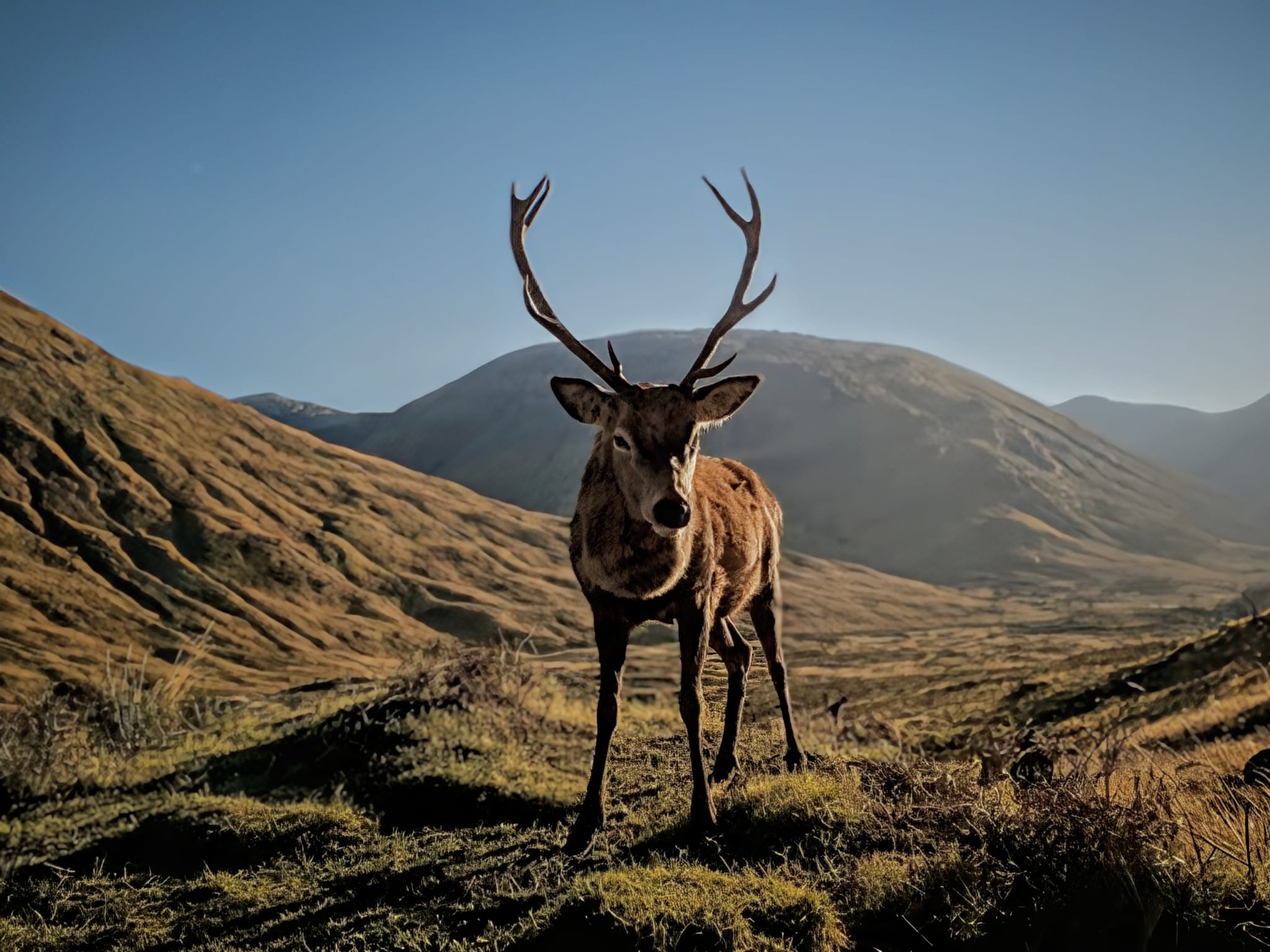
Most people approach wildlife photography like tourists. They show up, hope something appears, take a few shots, and leave disappointed. Then they blame the location, the light, or their gear.
That’s the wrong frame entirely.
Wildlife photography is fundamentally a patience and knowledge sport, not a technical one. The photographers getting exceptional shots aren’t luckier. They’re more prepared, more present, and more willing to fail repeatedly without quitting.
Get this straight before anything else: your biggest limiting factor is almost never your camera.
Gear — What Actually Matters vs. What’s Marketing
Lenses: The One Thing Worth Spending On
If you have a limited budget, put it in glass, not the camera body.
- Minimum focal length for most wildlife: 400mm. Anything less and you’ll spend most of your time cropping heavily, which destroys image quality.
- The 100-400mm zoom range is the most practical starting point. It gives flexibility. The 500mm and 600mm primes are better for birds and fast-moving subjects but punish you if the animal is close.
- Teleconverters: A 1.4x on a sharp 400mm is often more useful than buying a 600mm. A 2x typically kills autofocus speed and image sharpness on anything except top-tier glass.
Camera Bodies: What to Prioritize
Stop obsessing over megapixels. For wildlife, the priorities are:
- Autofocus tracking speed and accuracy — this is the single most important body feature. Modern mirrorless systems (Sony A9 series, Canon R3/R5, Nikon Z9/Z8) are genuinely superior here.
- Burst rate — minimum 10fps for birds in flight or fast action. 20fps+ is where you want to be.
- Buffer depth — how many shots before the camera slows down. Irrelevant until it isn’t. In a 3-second burst at a charging elephant or a diving kingfisher, you’ll use every frame.
- Weather sealing — you will be in rain, dust, humidity, and cold. Unsealed bodies are a liability.
What You Don’t Need
- The latest body. A 3-year-old flagship outperforms a current mid-range body for wildlife every time.
- Fast aperture lenses if budget is tight. f/6.3 at 600mm is workable in good light. f/5.6 is better. f/4 is a luxury, not a necessity at the start.
- A tripod for most active wildlife work. A monopod or gimbal head is more practical. Full tripods slow you down when animals are moving.
Understanding Animal Behaviour — The Real Skill
This is the section most photography guides skip. That’s a mistake.
Why Behavior Knowledge Beats Technique
If you know that a particular bird species engages in territorial displays at dawn during spring, you can position yourself before dawn, at the right location, every single morning during that window. You don’t need luck. You created the conditions for a repeatable shot.
Compare that to someone who just shows up at a nature reserve and walks around hoping something appears.
What to Study
For birds:
- Feeding patterns by season — what they eat, when, and where
- Nesting behavior — when they build, incubate, feed young
- Flight patterns — do they fly into the wind? Which perches do they prefer?
- Alarm calls vs. territorial calls — knowing the difference tells you if a predator is nearby or if the bird will stay put
For mammals:
- Daily activity windows — most large mammals are most active at dawn and dusk (crepuscular)
- Water sources — in dry seasons, water is a predictable magnet
- Trails and movement corridors — animals are creatures of habit
- Social hierarchies — dominant males often behave differently from juveniles; knowing who’s who shapes what shots are possible
For marine life:
- Tidal patterns matter more than time of day
- Feeding aggregations are predictable if you track baitfish movement
- Haul-out sites for seals and sea lions are consistent
Practical Steps
- Read field guides. Not photography books — actual ecological field guides for your region.
- Spend time in the field without a camera. Just watch. You’ll learn ten times faster.
- Talk to rangers, guides, and local naturalists. They’ve spent years watching specific animals in specific places. That knowledge is worth more than any lens.
- Use iNaturalist and eBird (for birds) to find where species are being sighted and when.
Light — The Variable You Can Control More Than You Think
The Hard Truth About Wildlife Light
You can’t control when a leopard decides to walk into a clearing. But you can control when you’re there, which means you can set yourself up for the best possible light conditions.
Golden hours (first hour after sunrise, last hour before sunset) are the standard advice and it’s correct — but not for the reason most people say. The low angle of light creates longer shadows and more texture. The warm color temperature is forgiving on fur, feathers, and skin tones. The lower intensity reduces harsh highlights.
Overcast light is actually underrated for many subjects. It’s soft, even, and eliminates the blown highlight problem. For forest species especially, a bright sunny day creates terrible dappled light that destroys images. Flat overcast can be your friend.
Midday light in open environments — harsh, contrasty, and difficult. In practice, most experienced wildlife photographers use midday for scouting, sleeping, or post-processing.
Direction Matters More Than Intensity
Light from behind you = flat, safe, forgiving. Light from the side = texture, depth, drama. Light from behind the subject = rim light, silhouettes, creative — but technically demanding.
Backlit fur on a mammal in golden hour can be extraordinary. Backlit feathers on a bird create a translucent glow. But exposure is tricky — you’ll either blow the background or underexpose the subject. Spot metering on the subject and accepting a bright background is usually the right call.
Dealing With Bad Light
- Increase ISO before you miss the shot. Grain is recoverable in post. Motion blur from too slow a shutter is not.
- Know your camera’s high ISO performance ceiling. Modern cameras are usable at ISO 3200-6400 in most cases.
- In low light, open your aperture before you increase shutter speed. Depth of field matters less than a sharp subject.
Field Craft — How to Actually Get Close
The Problem With Most Approaches
Most beginners walk toward animals directly, at normal human speed, making eye contact. Every prey animal on the planet reads this as predator behavior. You will consistently flush birds and deer before you’re in range.
Movement Principles
- Never walk directly toward a subject. Walk at an angle or in an arc. This is less threatening.
- Move during moments of distraction. When the animal has its head down grazing, eating, or looking away — move. Freeze the moment it looks up.
- Get low. A crouching or prone human is less alarming than a standing one. It also gives you a better angle — eye-level shots are almost always more powerful than shots looking down on an animal.
- Move slowly. Predators lunge. Slow movement reads as non-threatening.
- Use natural cover. Move from tree to tree, use ridgelines, stay in shadows. This isn’t about hiding perfectly — it’s about breaking your silhouette.
Distance and Respect
There’s a practical and ethical dimension here.
Practically: the “minimum distance” that produces a usable shot varies by species, focal length, and conditions. With 600mm on a crop sensor (effectively 900mm), you can work from much farther. With 300mm, you need to be much closer.
Ethically: if your presence is changing the animal’s behavior, you’re too close. If a bird stops what it’s doing to watch you, back off. If a mammal turns to face you or starts moving away, you’ve crossed a line. Stressed animals produce worse images anyway — tense posture, flattened ears, whites of eyes showing. You want relaxed, natural behavior.
Using Vehicles
In savanna environments especially, animals are significantly less alarmed by vehicles than by humans on foot. A vehicle becomes a mobile hide. Stay in the vehicle, move slowly, keep engine noise low, and you can often approach within remarkable distances of large mammals. Don’t stand up or lean out — the moment you break the vehicle’s silhouette with a human shape, the threat response kicks in.
Technical Settings — The Practical Framework
Shutter Speed
This is the most critical variable in wildlife photography.
- Stationary birds/mammals: 1/500s minimum. 1/1000s is safer.
- Birds walking or mammals moving slowly: 1/1000s minimum.
- Birds in flight: 1/2000s minimum. 1/3200-1/4000s for fast species like falcons or terns.
- Large mammals running: 1/1600-1/2000s.
The common mistake is using too slow a shutter speed and then wondering why images are soft. They’re not soft from bad focus — they’re soft from motion blur. These look identical at first glance but have completely different causes and solutions.
Aperture
- Use your widest aperture in low light for more light and background separation.
- But don’t reflexively shoot wide open. At f/4 on a 500mm lens, your depth of field is extremely thin. If a bird turns its head, the eye you focused on may be sharp but the bill will be out of focus. Sometimes stopping down to f/5.6 or f/8 gives you margin for error.
- Background distance matters more than aperture for separation. A subject 10 meters from a background will blur it more than aperture alone can.
ISO
Stop treating ISO as the enemy. Noise at ISO 3200 from a modern camera is far less of a problem than a missed shot or motion blur from trying to keep ISO low.
- Learn your specific camera’s noise performance. Shoot tests.
- ISO 800-1600 is generally clean on current bodies.
- ISO 3200-6400 is workable with noise reduction in post.
- ISO 12800+ should be a last resort but is sometimes the right call.
Autofocus
- Use continuous autofocus (AI Servo on Canon, AF-C on Nikon/Sony) for anything moving.
- Set your AF area mode to suit the situation: animal eye detection AI is now reliable on most modern bodies and is worth using. For erratic flight paths, a wider zone AF gives the system more to work with.
- The single most important AF habit: pre-focus on the area where you expect the action. Don’t try to acquire focus on a moving bird from scratch. Have your AF point in the right zone before the animal enters frame.
Exposure Mode
- Aperture priority works well in consistent light conditions (open savanna, clear skies).
- Manual mode is worth learning for situations where light is consistent and predictable (golden hour at a water hole). It removes exposure variability between frames, which matters when you’re culling hundreds of images.
- Shutter priority is useful specifically when your minimum shutter speed is the constraint — like birds in flight in changing light.
- Use exposure compensation aggressively. Most cameras expose to protect highlights. In wildlife, the subject matters more than the background sky.
Composition — Rules Worth Knowing, Rules Worth Breaking
The Baseline Rules (And Why They Exist)
Rule of thirds: Place subjects off-center. It creates visual tension and implied movement. A bird in the center of the frame looks static. A bird in the left third with empty space to the right implies it’s moving into that space.
Eye-level perspective: Shooting level with the animal’s eye creates intimacy and connection. Shooting from above is literally a dominant posture — it produces clinical, documentary images rather than immersive ones.
Leading room: Leave space in the direction the animal is facing or moving. This is one of the hardest habits to build because your instinct is to center the subject. Fight it.
Clean backgrounds: A chaotic background competes with your subject. Simple, separated backgrounds — water, sky, uniform vegetation — let the subject dominate.
When to Break Them
- A centered composition of a perfect reflection in still water may be stronger than off-center.
- A bird shot from above can work if the water or ground pattern creates an interesting abstract element.
- Tight crops that break all compositional rules can be powerful for emphasizing texture — the eye, the feathers, the fur.
The rule-breaking question to ask: does this compositional choice serve the image, or am I just being sloppy? Intentional rule-breaking is different from not knowing the rules.
The Sequence Approach
Stop thinking in single frames. Think in sequences. Burst a series of shots through an action — a bird landing, a mammal interacting with young, a predator scanning for prey. The best frame is rarely the first or the obvious one. It’s often the one that captures the peak of an expression or a moment of behavioral truth that you couldn’t have predicted.
Location Intelligence
Research Before You Travel
- Time of year is often more important than location. A world-class wildlife destination in the wrong season produces nothing. Understand migration windows, breeding seasons, and dry season vs. wet season effects on animal visibility.
- The Serengeti during the Great Migration is extraordinary. The Serengeti in the wrong month is a good but ordinary safari.
- Arctic fox behavior in winter is fundamentally different from summer. White winter fur vs. brown summer coat, different food sources, different activity patterns.
Finding Local Conditions
- Photography forums specific to your target species are more useful than general travel advice.
- Connect with local guides who specialize in photography. They often know specific trees where an owl roosts, specific stretches of river where kingfishers fish, specific dens used year after year. This information is worth more than any gear upgrade.
- Check recent reports from other photographers. iNaturalist, local birding groups, Facebook groups for regional photography — all useful signal.
Starting Where You Are
One of the biggest mistakes is waiting to go somewhere exotic before taking wildlife photography seriously. Every location has interesting species. Shooting common species near home develops your technique, behavior knowledge, and patience in ways that directly transfer to rare or exotic species later.
Shooting common sparrows and pigeons in your local park teaches you more about flight photography than reading about it. Shooting squirrels teaches you about approach, patience, and anticipating behavior. Dismiss local wildlife and you’ll arrive in the Masai Mara completely unprepared to use what it offers.
Post-Processing — What to Do and What to Resist
The Honest Assessment of Post-Processing
Post-processing cannot save a fundamentally bad image. Soft focus, severe camera shake, poor light, and bad composition are not fixable in Lightroom. Accept this and stop trying to rescue images that don’t deserve to be rescued.
What post-processing can do:
- Recover exposure within about 2 stops (varies by sensor quality)
- Reduce noise with minimal sharpness loss
- Correct white balance (crucial in golden hour or shade)
- Enhance local contrast and micro-detail in fur and feathers
- Remove minor distractions (a small branch crossing the frame, sensor dust)
Lightroom Basics for Wildlife
Exposure and tone:
- Lift shadows slightly to reveal detail in dark fur or underexposed areas
- Recover highlights if a bright sky is competing with the subject
- Increase clarity moderately for texture — feathers, fur, scales respond well to this
Color:
- Adjust white balance first — golden hour images often benefit from slightly cooler treatment to avoid overly orange skin
- Vibrance over saturation — vibrance is more selective and less likely to blow colors
Sharpening:
- Use the Detail panel carefully. Over-sharpening creates artificial-looking halos
- The masking slider in Lightroom’s sharpening is underused — hold Alt while dragging to see what you’re sharpening. You want sharpening on the subject, not the background noise
Noise reduction:
- AI-based noise reduction (Lightroom’s Denoise, Topaz DeNoise) has improved dramatically. High-ISO images that were previously borderline are now routinely salvageable.
The Ethics of Manipulation
There’s a line between processing and fabrication. Removing a distracting branch is accepted. Compositing an animal from one image into a background from another is not — not if you’re presenting the image as documentary wildlife photography. Know which tradition you’re working in and be honest about it.
Building a Practice — The Long Game
The Consistency Problem
Most people who want to get good at wildlife photography go out sporadically, have a few exciting experiences, then go months without shooting. That pattern produces slow growth.
The photographers who improve fastest treat it like a discipline:
- Regular, scheduled time in the field — even locally, even on boring days
- Post-processing review sessions where they actively evaluate what worked and what didn’t
- Study of other photographers’ work with analytical intent — not just admiration, but asking: what did they do technically and behaviorally to produce this?
Building a Portfolio With Intentionality
Random shooting produces random results. Productive photographers often work projects — a specific species, a specific location across seasons, a specific behavior they’re trying to document. Projects force you to develop deep knowledge of your subject and create a coherent body of work.
Ask yourself: what do I actually want to photograph? A scattered answer means scattered results.
Critical Self-Assessment
The hardest skill to develop is honest evaluation of your own work. Most photographers are too attached to images that were personally memorable experiences but are objectively mediocre photographs.
The test: would this image hold your attention if you had no emotional connection to it? If a stranger scrolled past it, would they stop?
If not, file it as a learning experience and move on. Don’t post it. Don’t keep it in your portfolio. The bar for what deserves to exist publicly should be higher than “I was there and it was amazing.”
Summary: The Hierarchy of Priorities
If you had to order what to invest in, it’s this:
- Behavior and ecology knowledge — no substitute, no shortcut
- Time in the field — volume produces improvement
- A long lens — 400mm minimum, 500-600mm preferred
- Autofocus-capable camera body — mirrorless preferred for modern AF
- Light discipline — be in position before dawn, stay past sunset
- Field craft — learn to move, learn to wait
- Technical settings — understand your camera’s exposure triangle in wildlife-specific terms
- Post-processing — a multiplier on good captures, useless on bad ones
Everything else is noise.
Leave a Reply