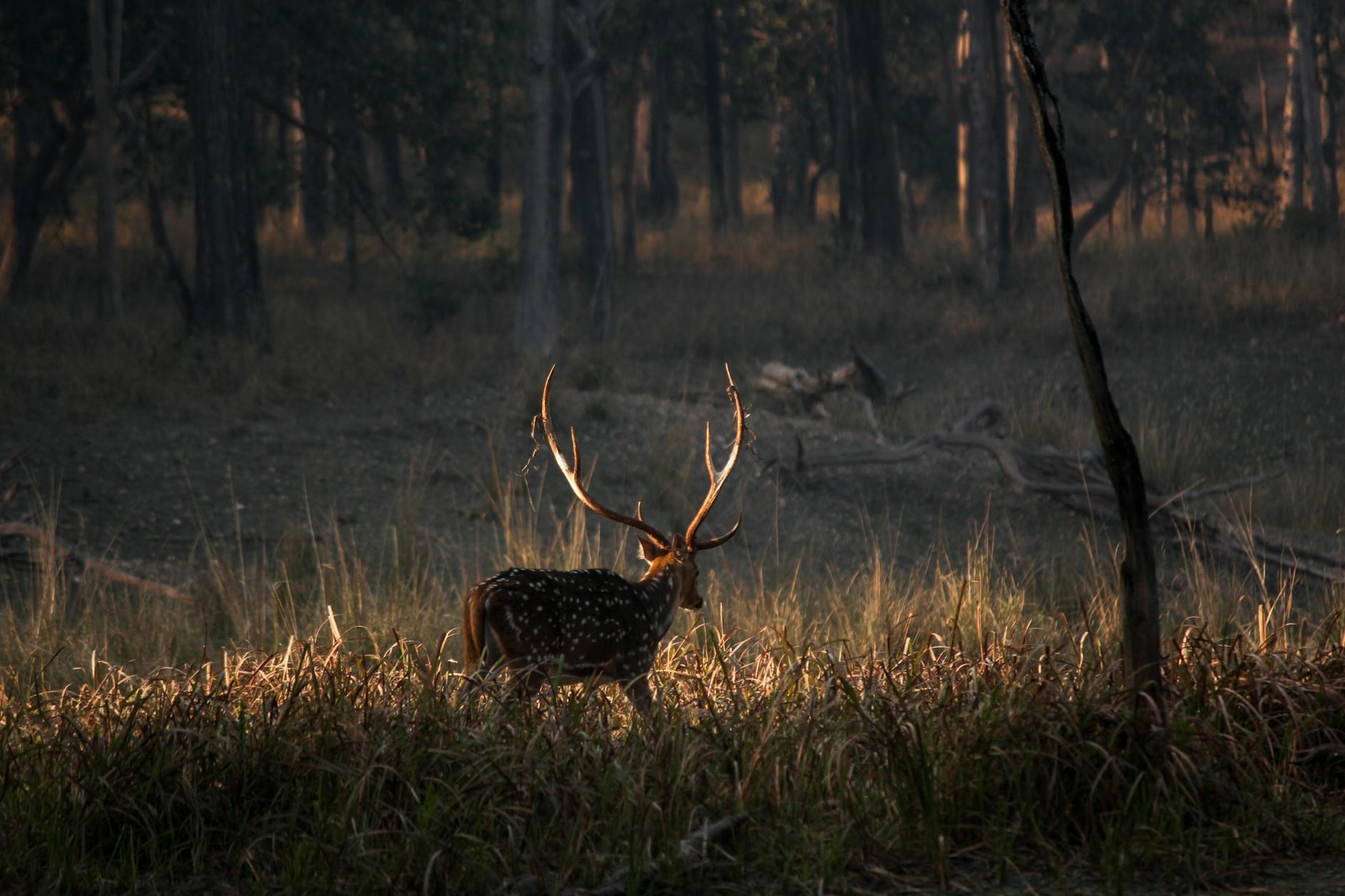
Wildlife photography in India offers dense biodiversity, warm light, and large mammal subjects in national parks. Scotland offers remote highland landscapes, unpredictable weather, and intimate access to birds of prey and red deer. India demands patience in heat and dust; Scotland demands resilience in cold, wind, and low-contrast light. Both reward fieldcraft over gear, but in completely different ways.
I have photographed in both. And the most honest thing I can tell you is that they are not comparable — not in the way most comparison guides suggest.
India is immersive. You are inside the wildlife. The heat presses against you. The dust gets into the camera body. The light in the golden hour of a dry season is extraordinary in a way that feels almost theatrical — rich and golden and designed for drama. You wait in jeeps that smell of diesel. You watch other vehicles crowd a tiger sighting. You learn to work around noise, around movement, around the managed chaos of a busy national park system.
Scotland is something else entirely. The light here is rarely dramatic. It is soft and silver and frequently absent altogether. The animals are shy, widely spread, and operating in landscapes that could swallow you whole. You carry gear through heather for hours. You photograph into haar — that particular coastal mist that makes distances disappear. You learn to love grey.
Neither is better. They simply require different versions of you as a photographer.
If you have read my broader thoughts on what really happens in the field, you will know that field photography rarely unfolds the way you expect it to. That principle is true everywhere — but the specific ways it surprises you are completely different depending on which side of the world you are working in.
Wildlife photography in India is about presence inside abundance. In Scotland, it is about stillness inside emptiness. Both strip you back to the same essential skills — and both will show you exactly where your gaps are.
Who This Is For
This is for wildlife photographers planning their first or next international trip, trying to decide between two very different environments. It is for photographers who have shot in one country and are curious what the other offers. And it is for anyone who wants an honest, experience-led comparison rather than a list of park names and species counts.
It is not a travel itinerary. It is not a gear list. It is a practitioner’s perspective on two very different wildlife photography environments — what they demand of you, what they reward you with, and what each one teaches you that the other cannot.
At a Glance: India vs Scotland for Wildlife Photography
| Factor | India | Scotland |
| Biodiversity | Exceptionally high — 500+ mammal species, 1,300+ bird species | Moderate — specialist species, high endemism in highlands |
| Iconic subjects | Bengal tiger, Indian elephant, leopard, Indian rhino, peacock | Red deer, red squirrel, osprey, golden eagle, red kite, puffin |
| Light quality | Intense; dramatic golden hour; midday harsh | Soft, diffuse, low-contrast; overcast is the norm |
| Best season | Oct–Feb (dry season, animals near water) | Apr–Sep (longer days); Oct–Nov for red deer rut |
| Terrain challenge | Heat, dust, dense vegetation in parks | Boggy moorland, highland scrambles, coastal exposure |
| Access model | Managed jeep safaris in national parks; strict zones | Open access hillwalking; hides at specific sites |
| Equipment demands | Long telephoto essential; dust protection critical | Weather sealing non-negotiable; wide-to-tele range useful |
| Cost level | Medium–high (park permits, guide, vehicle) | Low–medium (self-guided possible; hide fees modest) |
| Ethical complexity | High — crowd management, vehicle proximity to animals | Moderate — disturbance risk in nesting season |
| Beginner-friendly? | Yes, with a reputable guide; structure helps | Yes for lowland sites; highland work demands fitness |
Wildlife Photography in India: What the Guidebooks Do Not Tell You
India is photographically extraordinary. There is no equivocating that. The density of wildlife in certain habitats — the riverine forests of Kanha, the grasslands of Kaziranga, the sal forests of Corbett — produces a concentration of subject opportunity that is genuinely unlike anything I have experienced elsewhere.
But it is also a system. And like any system, it has pressures and limits that shape your photography in ways you do not fully anticipate until you are inside it.
The Light in India
The golden hour in India is not a metaphor. In the dry season, particularly in central and northern India between November and February, the early morning light falls at a low angle through dust-filtered air and produces a warmth that is genuinely cinematic. It is the light you see in the best big-cat images — that amber-orange cast over dry grass, the animal glowing against shadow.
That light lasts approximately forty minutes. After that, the sun rises fast and the light hardens into something technically difficult — high contrast, bleached colour, heavy shadow. Midday photography in Indian parks is generally considered dead time, and experienced field photographers use it for rest, review, and planning the evening session.
The lesson: India teaches you to be ruthlessly disciplined about time. The best sessions are early. The best images are made in those first forty minutes after dawn. If you are not in position before sunrise, you have already given away your best opportunity.
The Safari System
Most wildlife photography in India’s major national parks happens from open-top jeeps on designated tracks. The system is managed, regulated, and — at popular parks during peak season — heavily trafficked. A tiger sighting at Ranthambore or Bandhavgarh will attract multiple vehicles within minutes of being radioed in.
This creates a specific ethical and photographic challenge. The animals are acclimatised to vehicles, which allows closer approach than you would achieve on foot. But the crowd of vehicles around a sighting creates a managed-observation scenario rather than a natural-behaviour scenario. The animals are present; their behaviour is often disrupted.
Experienced photographers in India work around this by seeking less-visited parks, less-trafficked zones within popular parks, and by building relationships with guides who understand the difference between finding an animal and photographing one.
Key Species and What They Demand
Bengal Tiger: The benchmark subject of Indian wildlife photography. Photographing tigers well requires guide knowledge, early positioning, and significant luck. Composition is often constrained by vegetation and vehicle position. The best tiger images come not from busy sightings but from being in the right place before the animal appears.
Indian Elephant: More approachable than tigers in terms of frequency and access. Photographing elephants in forest light — particularly in southern India — is one of the most technically rewarding experiences in Indian wildlife photography. The challenge is vegetation; the reward is behaviour.
Birds — the underrated subject: India has some of the world’s richest avian diversity. Photographers focused exclusively on megafauna miss it almost entirely. Bharatpur (Keoladeo National Park) alone justifies a trip for any bird photographer, with densities of painted storks, sarus cranes, and migratory waterfowl that are extraordinary by any global standard.
What India Teaches You
India teaches patience with systems. It teaches you to work within constraints — of time, of access, of vehicle position — and to find the image available rather than the image imagined. It teaches discipline around light. And it tests your ability to remain observant and creative in chaotic, high-distraction environments.
The principles of gear management and preparation that go into Indian park photography are covered well in guides like the ultimate guide to wildlife photography — particularly around equipment preparation for extreme environments and variable access.
Wildlife Photography in Scotland: The Country That Teaches You Humility
Scotland is one of the finest wildlife photography destinations in Europe. It is also one of the most demanding — not because the access is difficult (much of it is remarkably open) but because the environment itself is indifferent to your plans.
The weather does not cooperate. The animals are wild in a way that managed-park subjects often are not. And the light, when it arrives, arrives in forms that require a completely different technical and aesthetic approach than anywhere in South Asia.
The Light in Scotland
Flat, grey, and silver is the default. Overcast skies filter direct sunlight into a soft, even illumination that eliminates harsh shadows and allows for detail in both highlights and shadows simultaneously. For many wildlife subjects — red squirrels against woodland, red deer in heather, otters on rocky shorelines — this light is actually ideal.
But it demands a different technical approach. You are working with lower contrast, which affects how your camera meters and how the image reads on screen. Many photographers coming from high-contrast environments initially underexpose in Scottish light because the scene looks brighter than it is. Histogram awareness becomes critical.
The exceptions are extraordinary. When Scotland gives you a winter sunrise over the Cairngorms with frost on the heather and a red deer stag in the foreground, or a golden September evening in Galloway with red kites overhead, it gives you something that no manufactured light can replicate. The rarity of those moments is part of what makes them so powerful.
Open Access and the Ethics of Distance
Scotland has the most progressive access legislation in the UK under the Land Reform (Scotland) Act 2003, which creates a general right of responsible access over most land. For wildlife photographers, this means extraordinary freedom — you can position yourself in landscape that would require permits or restrictions in most other countries.
The ethical weight of this freedom is significant. Without the structure of a managed safari system, the responsibility for appropriate behaviour around wildlife rests entirely with the individual photographer. Scotland’s breeding raptors — ospreys, golden eagles, peregrines, hen harriers — are protected species with strict legal protections around disturbance during nesting season.
Understanding and respecting these protections is not optional. It is part of what it means to photograph in Scotland seriously.
Key Species and What They Demand
Red Deer: Scotland holds the UK’s largest population of red deer, and the October-November rut is one of the great wildlife spectacles available to a British or visiting photographer. The challenge is terrain — you often need to walk several kilometres across open moorland to find roaring stags in good light and manageable distance. Fitness matters here as much as field craft.
Red Squirrel: One of Scotland’s most beloved and photographically rewarding subjects. Hide-based photography at woodland feeders produces intimate, close-up images that are technically challenging (fast movement, variable light) but enormously satisfying. The Galloway Forest Park and the Cairngorms are primary locations.
Ospreys: The osprey’s return to Scotland is one of conservation’s great success stories, and the birds at key sites like the Loch of the Lowes and Aberfoyle have become acclimatised to careful human observation. Watching a dive and catch from a good position is one of Scotland’s finest wildlife photography moments.
Otters: Scotland’s otters are genuinely wild and genuinely difficult. Finding them requires early starts, specific tidal knowledge, and the kind of silent, low-profile approach that tests every field craft skill you have. When it works, otter photography in Scottish coastal light is exceptional.
Puffins: Staffa, the Isle of May, and Handa Island during breeding season (May–July) offer puffin access that is genuinely extraordinary. The birds are bold and allow close approach during nesting. This is one of the few Scottish subjects where proximity is available without significant effort — the effort is in getting to the islands.
What Scotland Teaches You
Scotland teaches self-reliance. There is no jeep, no guide, no structured system telling you where to go and when. Every decision is yours — and every missed moment is yours too.
It teaches you to read weather and light in real time, to make decisions about when to push out despite bad conditions and when to adapt the plan. It teaches patience with a different quality than India — not the patience of waiting in heat for a tiger, but the patience of returning to the same hillside on the fifteenth consecutive morning because the light has not been right fourteen times before.
This kind of patience — and the field dispatch thinking it produces — is something I have explored in the Feathers, Frames & Field Dispatches series, which documents exactly this process of returning, waiting, and finding the image in conditions that do not cooperate.
Head-to-Head: Six Dimensions Where India and Scotland Diverge Most
1. How Each Environment Treats Beginners
India, paradoxically, is often more forgiving of inexperienced photographers than Scotland. The safari system provides structure — a guide who knows the animals, a vehicle that positions you correctly, a zone system that increases the odds of encountering your subject. You can make technically strong images on your first Indian safari without deep field craft knowledge, as long as your guide is good.
Scotland offers less scaffolding. Finding subjects requires research, physical effort, and field judgment that comes from experience. A beginner in the Cairngorms on a grey November morning may find nothing photographable and struggle to understand why.
The implication: India can build your confidence quickly. Scotland will build your judgment slowly — and more durably.
2. Equipment Requirements
Both environments demand long telephoto capability. In India, a 400mm or longer is standard for big cats; in Scotland, similar reach is useful for deer on open hillsides and raptors in flight.
The critical difference is weather sealing. In India, dust is the enemy — front elements, lens mounts, and camera bodies need to be protected and cleaned regularly. In Scotland, moisture is the constant risk. Weather-sealed bodies and lenses are not a luxury; they are a practical necessity for anyone working seriously in highland or coastal conditions.
Kit selection for different environments — particularly how to match lens choice to subject and habitat — is something I have covered in detail in the Canon 24mm lens with Canon EOS 2000D complete guide, which addresses how wider focal lengths contribute to wildlife photography in landscape-led environments like Scotland.
3. The Role of Guides and Local Knowledge
In India, a good guide is transformative. The best guides carry decades of park knowledge — animal home ranges, seasonal movement patterns, specific individuals they can identify by markings. The quality of your guide correlates directly with the quality of your photographic opportunity.
In Scotland, formal guiding for wildlife photography exists but is less structural. Local knowledge matters — a highland gamekeeper, a birding contact at a nature reserve, a regular at a sea eagle watch point — but the overall system is more self-directed. Building a network of local contacts is part of what experienced Scotland-based photographers invest in over years.
4. Ethical Framework
Both environments demand ethical engagement, but the pressures are different.
In India, the primary ethical challenges are vehicle density at sightings, pressure on habitats from tourism infrastructure, and the complex political economy of conservation versus local land use. As a visiting photographer, the ethical choice is in who you book with — whether your fees support genuine conservation, whether your guide practice minimises animal disturbance.
In Scotland, the primary ethical challenge is individual behaviour. The open-access model means there is no system preventing you from approaching a golden eagle nest in breeding season — only your own knowledge, judgment, and commitment to the legal and ethical framework. This is a higher bar in some ways, because it relies entirely on photographer responsibility rather than system regulation.
5. What Each Does to Your Editing
India produces images with strong colour, high contrast, and dramatic light that respond well to standard processing — contrast reduction in midday shots, selective shadow lift, saturation calibration for that characteristic golden-hour warmth.
Scotland produces images that require more nuanced processing. Low-contrast light means the image often needs careful adjustment of tonal range, local contrast, and colour balance. Overcast light can produce a slight blue cast that needs correction or creative use. The images that work best from Scottish sessions often reward a more restrained, film-influenced processing approach — less saturation, more tonal depth.
6. Sustainability as a Career
Both markets support professional wildlife photography, but in different ways and at different scales. The Indian wildlife photography market is large, internationally recognised, and generates significant commercial demand for high-quality tiger and big-cat imagery. Scotland supports a strong domestic market in conservation photography, editorial, and landscape-wildlife crossover. If you are thinking about the career dimension — which market, which specialism, which approach — the question of whether wildlife photography can be a sustainable career in 2026 is worth exploring directly, as the country you build your body of work in shapes the market you are positioned for.
Case Study: The Same Photographer, Two Completely Different Sessions
I want to describe two sessions — one from each country — that happened within the same year and that together illustrate, more clearly than any table of comparisons, why these two environments produce such different photographic experiences.
India: Kanha National Park, February, 05:45
The jeep left before dawn. The cold was surprising — central India in February is cold in the mornings in a way that catches people who expect equatorial heat. By the time we reached the first zone, the sun was fifteen minutes from the horizon and the light was changing every two minutes.
We found a tigress with two sub-adult cubs near a dry streambed. She was resting. The cubs were restless — moving around her, occasionally playing, occasionally just lying close. Other vehicles arrived within minutes.
The challenge was not the animals. It was the vehicles. Every time a jeep repositioned, it shifted the background, changed the light angle, created engine noise. The cubs were alert to the engines in a way that modified their behaviour — slightly, but visibly. The natural curiosity that I had hoped to photograph was tamped down by the managed-encounter context.
What I photographed instead was the relationship between the three animals — the way the tigress tolerated the cubs’ movement, the way the light caught her face when she raised her head. Not what I planned, but something real. Forty-five minutes of shooting, then the light was gone.
Scotland: Galloway Forest Park, October, Rut Season
I left the car at 06:00 and walked for ninety minutes across boggy ground in horizontal drizzle before I heard the first roar. Sounds carry differently in Highland terrain — it could have been half a kilometre or two. I adjusted course.
The stag was alone, working a patch of moorland between two ridges. No other photographers visible. No vehicles. Just the animal, the landscape, the sound, and the light — which was flat and grey and turned the heather into a kind of silver-purple that processed beautifully.
He did not see me until I had made ninety minutes of images. When he finally caught my scent on a shift of wind and moved off across the ridge, I felt the specific satisfaction of a session that was entirely on the animal’s terms.
The India session gave me technically stronger images. The Scotland session gave me something harder to articulate — the feeling that the encounter was genuine.
Three Statistics That Frame This Comparison
- India hosts approximately 8% of the world’s known biodiversity within 2.4% of the planet’s land area — one of the highest wildlife density ratios globally. (Source: Ministry of Environment, Forest and Climate Change, India, 2023.)
- Scotland is home to 75% of the UK’s red squirrel population and 75% of the global population of Slavonian grebe — illustrating that photographic value is not always about megafauna density but about specialist access to specific species. (Source: NatureScot, 2024.)
- A 2023 survey of British wildlife photographers found that 68% cited weather adaptability as the most important practical skill for working in the UK, compared to 12% who cited the same skill as most important when working in South Asian parks. The contrast reflects entirely different environmental demands.
Practical Planning: What to Prioritise for Each Destination
| Priority | India (e.g. Kanha / Corbett / Kaziranga) | Scotland (e.g. Cairngorms / Galloway / Skye) |
| Season | Oct–Feb for dry season and large mammal visibility | Apr–Jul for breeding birds; Sep–Nov for deer rut |
| Permits | Park entry + vehicle + guide mandatory; book ahead | Open access for most areas; hide fees at specific sites |
| Fitness | Moderate (jeep-based, some walking) | High for highland work; moderate for hide-based sites |
| Core kit | 400–600mm telephoto; dust protection; polariser | 100–400mm zoom; weather-sealed body; tripod/hide |
| Guide strategy | Research guides by species speciality; read reviews critically | Build local contacts; join nature reserve networks |
| Timing of day | Be in position before sunrise; rest midday | Arrive early; work in overcast as well as golden light |
| Ethical prep | Read park rules; choose ethical operators | Know nesting season dates; understand disturbance law |
Which Should You Visit First?
This is the question I get asked most often, and the honest answer is: it depends on what you want to develop.
Go to India first if you want to accelerate your confidence, develop your ability to work in structured sessions, and photograph iconic large mammal subjects in extraordinary light. The structured safari system provides scaffolding that makes strong early images more achievable. The feedback loop — you shoot, you review, you improve — is faster in India because the subjects are more available.
Go to Scotland first if you want to build field craft, self-reliance, and the ability to work in genuinely challenging conditions. Scotland will expose your weaknesses faster than India because there is no guide to compensate for them. It is slower, harder, and more demanding — but the foundations it builds are durable.
My own view: do both, and do them in close proximity if you can. The contrast between the two environments is instructive in a way that reading about either one in isolation cannot replicate. You understand what India asks of you more clearly after Scotland has stripped back the scaffolding. And Scotland’s demands become more legible after India has shown you what wildlife photography feels like with conditions in its favour.
Summary: What Each Country Gives You
- India gives you: dramatic light, iconic subjects, structured access, guide-led field sessions, and high-volume photographic opportunity in a concentrated time window.
- Scotland gives you: self-reliance, patience, intimate encounters with genuinely wild animals, extraordinary landscape context, and the specific satisfaction of images entirely earned rather than facilitated.
- Both demand: behavioural knowledge, ethical engagement, fitness for the terrain, and the humility to accept that the field has its own agenda.
- The equipment gap: both need telephoto reach; India needs dust management and Scotland needs weather sealing — these are not optional.
- The career implication: both markets are viable but distinct — India for big-cat and megafauna editorial; Scotland for conservation, landscape-wildlife crossover, and domestic editorial.
Frequently Asked Questions
Is India or Scotland more beginner-friendly for wildlife photography?
India is more structurally accessible for beginners due to the managed safari system and guide availability. Scotland is more technically demanding — particularly in highland environments — but coastal and lowland sites such as the Isle of May or Cairngorms Wildlife Reserve are genuinely accessible for photographers at all levels.
What is the best time of year to photograph wildlife in India?
The dry season, roughly October to February in most central and northern parks, is considered optimal. Water sources concentrate animals, vegetation is lower, and temperatures are manageable. The monsoon season (July–September) closes most parks and makes photography extremely difficult.
What is the best time of year for wildlife photography in Scotland?
There is no single best season — it depends on your subject. April to July for breeding seabirds, raptors, and red squirrel in summer coats. September to November for the red deer rut, autumn light, and migratory birds on the east coast. Winter for dramatic highland light and ptarmigan in white plumage.
Do I need a guide for wildlife photography in Indian national parks?
In most national parks, a certified naturalist guide is mandatory. Beyond the legal requirement, a good guide is genuinely transformative for photographic outcomes — they understand individual animals, seasonal patterns, and zone-specific behaviour in ways that take years to develop independently.
Is wildlife photography in Scotland ethical without a guide?
Yes, with knowledge and preparation. Scotland’s open-access model assumes responsible individual behaviour. The key ethical requirements are understanding seasonal disturbance guidelines for protected species, respecting nesting seasons, and knowing the legal framework around Schedule 1 birds. These are learnable — and following them is non-negotiable.
Leave a Reply